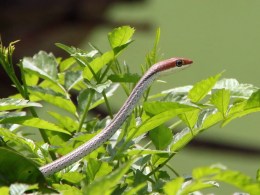
You might not realize it, but reptiles are disappearing faster than almost any other animal group on Earth. While pandas and tigers grab headlines, species like the hawksbill sea turtle and Philippine crocodile are vanishing with barely a whisper.
According to recent conservation assessments, nearly one in five reptile species faces extinction, yet these ancient survivors receive a fraction of the attention given to furry mammals.
Understanding which endangered reptile species need your awareness can transform how you view wildlife conservation and the delicate ecosystems these creatures maintain.
This guide introduces you to 20 critically endangered reptiles spanning oceans, islands, and remote habitats across the globe. You’ll discover what makes each species unique, where they struggle to survive, and why their disappearance would create ripple effects throughout their ecosystems.
1. Leatherback Sea Turtle

When you encounter a leatherback sea turtle (Dermochelys coriacea), you’re looking at the largest turtle on Earth. These giants can weigh up to 2,000 pounds and dive deeper than 4,000 feet while hunting jellyfish across open oceans.
Unlike other sea turtles, leatherbacks have flexible, leather-like shells that allow them to withstand crushing deep-sea pressure.
You’ll find leatherbacks in tropical and temperate waters worldwide, from the Caribbean to the Pacific coasts of Central America. They nest on beaches in places like Trinidad, Costa Rica, and Indonesia, though nesting sites have declined dramatically.
Climate change threatens their survival by altering sand temperatures, which determine whether hatchlings become male or female. Warmer beaches produce more females, creating dangerous gender imbalances in future populations.
Plastic pollution poses another severe threat since leatherbacks mistake floating plastic bags for jellyfish, their primary food source. Fishing gear entanglement kills thousands annually, while coastal development destroys critical nesting beaches.
Pro Tip: If you live near nesting beaches, participate in local turtle watches during nesting season and keep beach lights off at night, as artificial lighting disorients hatchlings.
2. Hawksbill Sea Turtle

The hawksbill sea turtle (Eretmochelys imbricata) gets its name from its distinctive hawk-like beak, perfectly designed for extracting sponges from coral reef crevices.
You can identify them by their beautiful overlapping shell plates displaying amber and brown patterns that unfortunately made them targets for the tortoiseshell trade for centuries.
These turtles inhabit tropical coral reefs throughout the Atlantic, Pacific, and Indian Oceans. You’ll spot them in the Caribbean, Southeast Asia, and along Australia’s Great Barrier Reef.
Hawksbills play a crucial role in maintaining reef health by consuming sponges that would otherwise compete with corals for space on the reef structure.
Their critically endangered status stems from decades of exploitation for their stunning shells, which were crafted into jewelry and decorative items. Though international trade bans now exist, illegal trafficking continues in some regions.
Coral reef destruction from climate change and pollution eliminates their feeding grounds, while coastal development removes nesting sites.
3. Kemp’s Ridley Sea Turtle

You’re looking at the smallest and rarest sea turtle species when you see a Kemp’s ridley (Lepidochelys kempii). Adults typically weigh just 75-100 pounds with nearly circular shells displaying olive-gray coloring.
These turtles exhibit a fascinating nesting behavior called “arribada,” where hundreds of females emerge simultaneously to nest on the same beach.
Kemp’s ridleys primarily inhabit the Gulf of Mexico, with the vast majority nesting on a single beach in Rancho Nuevo, Mexico. This concentration makes the entire species vulnerable to localized disasters.
Young turtles often drift into Atlantic coastal waters from Florida to New England, where they feed in shallow bays and estuaries.
The species nearly went extinct in the 1980s when the population crashed to just a few hundred nesting females. Conservation efforts involving protected nesting beaches and turtle excluder devices in fishing nets have helped numbers recover somewhat, though they remain critically endangered.
Oil spills, like the 2010 Deepwater Horizon disaster, devastate their Gulf habitat and food sources.
Common Mistake: Many people assume all sea turtles nest at night, but Kemp’s ridleys are unique daytime nesters, making them more vulnerable to human disturbance and predators.
4. Galápagos Tortoise

When you visit the Galápagos Islands, you’ll encounter one of the most iconic endangered reptile species: the Galápagos tortoise (Chelonoidis niger complex). These massive herbivores can weigh over 500 pounds and live more than 100 years, making them among Earth’s longest-lived vertebrates.
Different islands produced distinct subspecies with varied shell shapes—dome-shaped shells on humid islands with abundant vegetation, and saddle-backed shells on arid islands where tortoises must stretch their necks to reach higher vegetation.
These tortoises exist only on the Galápagos Islands of Ecuador, though they once numbered in the hundreds of thousands. Each island’s population evolved unique characteristics, creating a living laboratory of evolution that fascinated Charles Darwin.
Today, only about 15,000 individuals survive across the archipelago. Invasive species introduced by humans nearly wiped out several subspecies. Rats eat tortoise eggs, while goats and pigs destroy vegetation and compete for food.
The species faced its darkest period when 19th-century whalers and pirates harvested thousands for food, as tortoises could survive for months without food or water in ship holds.
Captive breeding programs on the islands have successfully restored some populations, though several subspecies went extinct before conservation efforts began. You can support these efforts by visiting responsibly and supporting organizations working to remove invasive species from island ecosystems.
5. Radiated Tortoise

The radiated tortoise (Astrochelys radiata) displays one of nature’s most stunning shell patterns, with brilliant yellow lines radiating from the center of each dark scute, creating a star-burst effect.
This beauty, unfortunately, makes them highly sought after in the illegal pet trade. Adults reach impressive sizes of 16 inches and can weigh up to 35 pounds.
You’ll find radiated tortoises exclusively in the spiny forests and dry regions of southern Madagascar. These slow-moving herbivores graze on grasses, cacti, and other vegetation in one of the world’s most unique ecosystems.
Madagascar’s isolation has created biodiversity found nowhere else on Earth. The radiated tortoise faces extinction from multiple threats converging simultaneously. Poaching for the international pet trade has devastated populations, with thousands smuggled out of Madagascar annually.
Local consumption of tortoise meat has increased as other protein sources become scarce. Habitat loss from slash-and-burn agriculture destroys the spiny forests these tortoises depend on.
Key Insight: Madagascar has lost over 90% of its original forests, and radiated tortoises now survive in fragmented populations vulnerable to local extinction events.
6. Ploughshare Tortoise

If you could choose the world’s rarest tortoise, the ploughshare tortoise (Astrochelys yniphora) would top the list. Also called the angonoka, fewer than 400 individuals survive in the wild, all confined to a single location in northwestern Madagascar.
You can identify them by their dramatically protruding gular scute under their neck—a “ploughshare” that males use in combat when competing for mates.
This species inhabits bamboo-dominated scrublands in an extremely limited range near Baly Bay, Madagascar. Their golden-brown domed shells with dark growth rings make them strikingly beautiful, which tragically fuels demand in the illegal pet trade.
Each wild tortoise is microchipped and monitored by conservationists. The ploughshare tortoise’s critically endangered status results from being one of the most illegally trafficked reptiles globally. Individual tortoises sell for tens of thousands of dollars on the black market, making them targets for sophisticated poaching operations.
Habitat degradation from fires and introduced species compounds the threat. Conservation breeding programs in zoos worldwide maintain insurance populations, but reintroduction efforts face challenges from persistent poaching pressure. Armed guards patrol their remaining habitat to protect every individual.
7. Burmese Star Tortoise

The Burmese star tortoise (Geochelone platynota) displays striking radiating yellow stripes against a dark background, similar to its relative the radiated tortoise. These medium-sized tortoises reach about 10 inches and inhabit dry, deciduous forests of central Myanmar.
Their population plummeted so dramatically that scientists believed them functionally extinct in the wild by the 1990s.
You would have found these tortoises throughout Myanmar’s dry zone, grazing on grasses and fallen fruits in monsoon forests. Traditional Buddhist beliefs in Myanmar once protected them from exploitation, but changing cultural practices and the international pet trade decimated populations within just a few decades.
The species faced near-total collapse from collection for the Chinese food and pet trade. Tens of thousands were exported before conservation efforts began.
Their beautiful shells made them especially desirable, and their rarity only increased demand among collectors willing to pay premium prices.
A remarkable conservation success story has emerged through massive captive breeding and reintroduction programs. Wildlife Conservation Society initiatives have released thousands of captive-bred tortoises back into protected areas in Myanmar, though wild populations remain extremely vulnerable. The species demonstrates how intensive conservation can pull animals back from the brink.
Pro Tip: Supporting accredited breeding programs through donations provides hope for species recovery without fueling the illegal wildlife trade that nearly caused their extinction.
8. Egyptian Tortoise

Don’t let the name fool you—the Egyptian tortoise (Testudo kleinmanni) is actually one of the world’s smallest tortoise species, with adults reaching just 5 inches in length. These tiny herbivores once inhabited coastal deserts and semi-arid regions across North Africa, from Libya to Egypt and into Israel’s Negev Desert.
You would search for Egyptian tortoises in sandy desert areas with sparse vegetation, where they shelter under bushes during extreme heat and emerge during cooler periods to feed on desert plants. Their small size allows them to survive in harsh conditions where larger reptiles cannot.
Habitat destruction has eliminated most of their former range as coastal development, agricultural expansion, and overgrazing by livestock destroy the fragile desert ecosystems they require.
Collection for the pet trade significantly reduced wild populations throughout the 20th century. Climate change intensifies challenges by making already extreme desert conditions even harsher.
The species now survives primarily in small, isolated populations in Libya and possibly Egypt, though current population sizes remain uncertain due to regional instability that prevents comprehensive surveys. Conservation breeding programs in Europe and North America maintain genetically diverse populations, preparing for potential future reintroduction efforts when habitat security improves.
9. Jamaican Iguana

When scientists rediscovered the Jamaican iguana (Cyclura collei) in 1990, they found a species believed extinct for nearly 50 years. These large, robust iguanas grow up to 4 feet long and display blue-green coloring with darker markings.
Males develop prominent jowls and dewlaps used in territorial displays. The Jamaican iguana survives only in the remote Hellshire Hills of southern Jamaica, clinging to existence in one of the Caribbean’s last intact dry limestone forests.
This specialized habitat provides the rocky crevices they need for shelter and the vegetation required for their herbivorous diet. Introduced predators devastate this species more than any other threat. Mongooses, brought to Jamaica in the 1800s to control rats, prey heavily on iguana eggs and juveniles.
Feral pigs and dogs kill adults and destroy nests. Habitat loss from charcoal production and expanding development further squeezes their already tiny range.
The Jamaican Iguana Recovery Group conducts intensive management including head-starting programs, where eggs are incubated in captivity and juveniles are raised until large enough to avoid mongoose predation before release. Despite these efforts, fewer than 200 adults survive in the wild.
Important Note: The Jamaican iguana serves as an umbrella species—protecting its habitat conserves the entire unique ecosystem of the Hellshire Hills, including numerous other endemic species.
10. Grand Cayman Blue Iguana

The Grand Cayman blue iguana (Cyclura lewisi) ranks among the Caribbean’s most spectacular reptiles, with adults displaying brilliant blue coloring, especially during breeding season. These impressive lizards reach 5 feet in length and can weigh up to 30 pounds, making them the largest native land animals on Grand Cayman.
You’ll find these iguanas only on Grand Cayman Island in the Cayman Islands, where they inhabit dry shrublands and forests. They spend mornings basking to raise their body temperature, then forage for leaves, flowers, and fruits before retreating to burrows or rock crevices during the hottest parts of the day.
By 2002, fewer than 25 blue iguanas survived in the wild, pushing them to the very edge of extinction. Habitat loss from development, vehicle strikes on roads bisecting their habitat, and predation by feral animals nearly eliminated the species entirely.
One of conservation’s greatest success stories unfolded through the Blue Iguana Recovery Program. Intensive captive breeding, head-starting, habitat protection, and public education increased wild populations to over 1,000 individuals.
The species’ status improved from Critically Endangered to Endangered, demonstrating what dedicated conservation can achieve. However, their limited range on a single small island means they remain vulnerable to hurricanes, disease outbreaks, or other catastrophic events.
11. Fiji Banded Iguana

When you spot a Fiji banded iguana (Brachylophus fasciatus), you’ll immediately notice the striking blue-green bands crossing its bright green body. Males display more vibrant coloring than females, especially during breeding season when their colors intensify for courtship displays.
These arboreal iguanas spend most of their lives in trees, using their strong claws and prehensile tails to navigate forest canopies.
These iguanas inhabit wet forests and coastal areas on a few islands in Fiji, including Viti Levu, Vanua Levu, and several smaller islands. They feed primarily on leaves, flowers, and fruits in the forest canopy, playing important roles in seed dispersal throughout Fiji’s tropical ecosystems.
The Fiji banded iguana faces severe threats from habitat destruction as forests are cleared for agriculture and development. Introduced predators including mongooses, feral cats, and rats prey on eggs and juveniles.
Climate change and rising sea levels threaten low-lying coastal habitats where some populations survive.
Perhaps most devastating has been the introduction of goats to several islands, which destroy understory vegetation and prevent forest regeneration. Illegal collection for the pet trade has also impacted some populations, though this threat has decreased with stronger enforcement of wildlife protection laws.
12. Komodo Dragon

The Komodo dragon (Varanus komodoensis) holds the title of world’s largest living lizard, with adults reaching 10 feet in length and weighing over 150 pounds. You’ll recognize these prehistoric predators by their powerful builds, forked tongues that constantly taste the air, and rough, armored skin covered in bony plates called osteoderms.
Komodo dragons inhabit just a handful of Indonesian islands, primarily Komodo, Rinca, Flores, and Gili Motang within Komodo National Park. These apex predators dominate their island ecosystems, hunting deer, wild pigs, water buffalo, and smaller prey.
They employ both ambush and pursuit hunting strategies, using their keen sense of smell to detect carrion from miles away.
Despite their fierce reputation, Komodo dragons face an uncertain future. Their extremely limited range makes them vulnerable to volcanic activity, fires, and other natural disasters that could wipe out substantial portions of the total population in single events.
Climate change poses an existential threat by reducing their already restricted habitat through rising sea levels and altered weather patterns.
Recent research suggests that climate change could eliminate significant portions of their habitat within decades, potentially reducing populations by 30% or more. Human-wildlife conflict occurs when dragons occasionally attack livestock or, very rarely, people, leading to retaliatory killings.
Tourism provides both benefits and challenges—visitor fees fund conservation efforts, but human presence can disturb nesting sites and alter natural behaviors. Poaching of their primary prey species indirectly threatens dragons by reducing available food sources.
Key Insight: Komodo dragons are living relics from a time when giant lizards roamed much of Indonesia, making their conservation critical for maintaining Earth’s evolutionary heritage.
13. Chinese Alligator

The Chinese alligator (Alligator sinensis) ranks among the world’s most endangered crocodilians, with possibly fewer than 150 individuals surviving in the wild. These small alligators typically reach only 5-7 feet in length, considerably smaller than their American cousins.
They have heavily armored bodies with bony plates along their backs and distinctive upturned snouts. You would find Chinese alligators in the Yangtze River valley of eastern China, where they historically inhabited slow-moving rivers, lakes, and wetlands.
These alligators excavate complex burrow systems in banks where they shelter during winter hibernation and extreme weather. They feed on fish, snails, clams, and small mammals.
The Chinese alligator’s decline represents one of conservation’s most dramatic collapses. Once widespread throughout the Yangtze basin, habitat destruction from agricultural development, dam construction, and urbanization eliminated over 90% of their wetland habitat.
Persecution by farmers who feared alligators would damage rice paddies and irrigation systems further reduced populations.
Today, virtually all remaining wild Chinese alligators survive in a small area of Anhui Province, where they face continued pressure from human activities. Pollution degrades water quality in their remaining habitat, while accidental capture in fishing gear causes mortality.
Extensive captive breeding programs in China and zoos worldwide maintain populations numbering in the thousands, but reintroduction efforts face challenges from lack of suitable habitat and human-wildlife conflict. The species serves as a symbol of China’s conservation challenges as the nation balances economic development with wildlife protection.
14. Orinoco Crocodile

When you encounter an Orinoco crocodile (Crocodylus intermedius), you’re seeing one of South America’s largest predators. These impressive reptiles can exceed 16 feet in length, with pale tan coloring that distinguishes them from other crocodilian species.
Their long, narrow snouts are perfectly designed for catching fish, their primary prey. The Orinoco crocodile inhabits freshwater rivers and wetlands of the Orinoco River basin in Venezuela and Colombia.
These crocodiles require specific habitat conditions including slow-moving rivers with sandy banks for nesting and abundant fish populations to sustain their dietary needs.
During dry seasons, they congregate in remaining pools, displaying complex social behaviors and hierarchies.
This species came perilously close to extinction from commercial hide hunting throughout the mid-20th century. Hunters prized their high-quality leather, resulting in the slaughter of hundreds of thousands of crocodiles. By the 1970s, fewer than 300 individuals survived across their entire range.
Conservation breeding and reintroduction programs in Venezuela and Colombia have slowly increased numbers to perhaps 1,500 individuals, though populations remain fragmented and vulnerable.
Habitat degradation from pollution, dam construction, and water extraction for agriculture continues threatening their recovery. Illegal hunting persists in some areas despite protective legislation.
Common Mistake: Many people confuse Orinoco crocodiles with the more common spectacled caiman, but Orinoco crocodiles grow much larger and have distinctly different head shapes and behaviors.
15. Philippine Crocodile

The Philippine crocodile (Crocodylus mindorensis) may be one of the world’s least known and most endangered crocodilians, with fewer than 200 individuals remaining in the wild. These relatively small crocodiles reach about 10 feet in length and display broader snouts than many other species.
They have golden-brown skin with darker bands, providing excellent camouflage in their freshwater habitats.
Philippine crocodiles inhabit freshwater rivers, lakes, and marshes primarily on the islands of Luzon, Mindanao, and possibly a few other Philippine islands. They prefer areas with dense vegetation along banks where they can ambush prey including fish, birds, and small mammals.
Unlike some crocodilian species, they rarely tolerate saltwater. The species has suffered catastrophic population collapse from multiple pressures converging simultaneously. Habitat destruction from conversion of wetlands to rice paddies and fish farms eliminated vast areas of suitable habitat.
Persecution by villagers who fear crocodile attacks, though Philippine crocodiles rarely threaten humans, has reduced numbers in accessible areas.
Dynamite fishing and poisoning of waters to catch fish has killed countless crocodiles as bycatch. The species’ freshwater specialization makes them particularly vulnerable to habitat degradation since they cannot retreat to coastal areas like some other crocodilians.
Community-based conservation programs in the Philippines now engage local villages in protection efforts, demonstrating how crocodiles can coexist with human communities when properly managed. Small captive breeding facilities maintain genetic diversity and supply animals for potential future reintroductions.
16. Gharial

You can’t mistake the gharial (Gavialis gangeticus) for any other crocodilian species—its extraordinarily long, narrow snout lined with over 100 sharp teeth makes it instantly recognizable. Males develop a distinctive bulbous growth called a “ghara” on the end of their snouts, used to create bubbles and vocalizations during courtship.
These specialized fish-eaters grow up to 20 feet in length. Gharials inhabit large, fast-flowing rivers in the Indian subcontinent, particularly in India and Nepal. They require deep pools with high fish populations and sandy banks for basking and nesting.
Their specialized morphology makes them perfectly adapted for catching fish but poorly suited for moving on land.
This ancient species has experienced one of the most severe declines of any crocodilian, with populations crashing by over 95% since the mid-20th century. Fewer than 650 adults now survive across their entire range.
Dam construction has fragmented river systems and altered water flows critical for gharial ecology. Sand mining destroys nesting beaches and disrupts breeding cycles.
Fishing nets drown gharials accidentally, while depletion of fish stocks from overfishing reduces available prey. Pollution degrades water quality in many rivers where gharials once thrived.
The species’ highly specialized anatomy makes them less adaptable to habitat changes than more generalist crocodilian species.
Conservation efforts including river protection initiatives and captive breeding programs in India and Nepal work to save the species, but gharials require specific habitat conditions difficult to restore or maintain in heavily modified river systems.
Pro Tip: Supporting river conservation efforts in India and Nepal doesn’t just help gharials—it protects entire freshwater ecosystems and the human communities that depend on clean rivers for drinking water, fishing, and agriculture.
17. Aruba Island Rattlesnake

The Aruba Island rattlesnake (Crotalus unicolor) exists nowhere on Earth except the Caribbean island of Aruba, making it one of the world’s rarest rattlesnakes.
These relatively small vipers reach about 3 feet in length and display variable coloring ranging from brown to pink to gray, allowing them to blend perfectly with Aruba’s rocky, arid landscape.
Their venom is potent but they rarely encounter humans. These rattlesnakes inhabit Aruba’s rocky desert terrain, particularly in the northeastern part of the island. They hunt primarily at night when temperatures drop, preying on birds, lizards, and rodents.
During daylight hours, they shelter under rocks or in crevices to escape the intense tropical heat. The Aruba Island rattlesnake’s extremely limited range makes it vulnerable to any threats affecting the small island. Habitat loss from tourism development, road construction, and urbanization continues shrinking available habitat.
Feral goats overgraze vegetation, degrading habitat quality and reducing prey populations. Perhaps most concerning, introduced boa constrictors from South America now compete with and may prey upon young rattlesnakes. Vehicle strikes kill snakes attempting to cross roads.
Collection for the illegal pet trade has historically impacted populations, though enforcement has improved.
The total population likely numbers fewer than 250 adults distributed across isolated patches of habitat. Conservation efforts focus on habitat protection, reducing vehicle strikes through wildlife crossing structures, and controlling invasive species.
The snake has become a symbol of Aruba’s unique biodiversity and conservation challenges facing island species worldwide.
18. Santa Catalina Island Rattlesnake

The Santa Catalina Island rattlesnake (Crotalus catalinensis) stands out among rattlesnakes by being the only species that has completely lost its rattle. These slender vipers reach about 2-3 feet in length and display grayish coloring with darker markings.
Scientists believe the rattle disappeared because the snakes climb trees and bushes to hunt for nesting birds, where a rattle would be disadvantageous for stealth.
This species lives exclusively on Santa Catalina Island in the Gulf of California, Mexico. The island’s isolation has driven unique evolutionary adaptations, including their tree-climbing behavior and rattle loss.
They hunt primarily for birds and lizards in the island’s scrubby vegetation and rocky outcrops. The entire population survives on an island measuring just 15 square miles, making them extraordinarily vulnerable to catastrophic events.
Feral cats introduced to the island prey heavily on rattlesnakes and compete for the same prey species. Habitat degradation from goats has historically damaged vegetation, though goat removal programs have begun habitat recovery.
Climate change poses severe threats through altered rainfall patterns that affect prey availability and extreme weather events that could devastate the small population.
The island’s single population means genetic diversity is naturally low, making the snakes potentially vulnerable to diseases or environmental changes that a more diverse population might withstand.
Recent surveys suggest populations have stabilized somewhat following cat removal efforts, but the species remains critically endangered due to its incredibly restricted range. The Santa Catalina Island rattlesnake demonstrates how island evolution creates unique species that require intensive protection.
Key Insight: Island species often evolve remarkable adaptations like the loss of the rattle, but their restricted ranges make them conservation priorities since losing a single island population means losing an entire species.
19. Jamaican Boa

The Jamaican boa (Chilabothrus subflavus), locally called the “yellow snake,” represents Jamaica’s largest native snake species, reaching up to 7 feet in length. These beautiful constrictors display variable coloring from yellowish to golden-brown with darker crossbands.
They’re non-venomous and pose no threat to humans, though historical persecution based on fear has contributed to their decline.
You’ll find Jamaican boas primarily in Jamaica’s remaining forests, though they once inhabited diverse habitats across the entire island. These nocturnal hunters prey on bats, birds, and rodents, playing important roles in controlling pest populations.
They’re accomplished climbers and often hunt bats by suspending themselves from cave entrances to snatch bats in flight.
The species faces multiple converging threats that have eliminated them from much of their former range. Habitat destruction from deforestation for agriculture and development has fragmented populations across Jamaica.
Mongoose predation significantly impacts young boas, which are vulnerable until they grow large enough to defend themselves.
Road mortality kills numerous adult boas, while many Jamaicans still kill snakes on sight despite education efforts about their beneficial pest control services. Hurricane damage to forests temporarily reduces available habitat and prey, though boas can recover if core populations survive.
Conservation education programs work to change attitudes toward snakes by emphasizing their ecological importance and harmless nature. Protected areas like Cockpit Country provide refugia, though even these face pressures from illegal logging and mining interests.
The Jamaican boa’s survival depends on preserving Jamaica’s remaining forests and reducing human persecution through continued education.
20. Round Island Boa
The Round Island boa (Casarea dussumieri) survives on one of the world’s smallest habitat ranges—two tiny islands off Mauritius totaling less than 400 acres. These slender boas reach about 4 feet in length and display brownish coloring with distinctive keeled scales.
They’re among the most primitive living boa species, making them scientifically invaluable for understanding snake evolution.
Round Island boas inhabit the rocky, windswept slopes of Round Island and Serpent Island off Mauritius. They hunt lizards, particularly geckos and skinks, in the sparse vegetation and rock crevices that cover these inhospitable islands.
The snakes’ slow metabolism allows them to survive in this resource-limited environment. The species teetered on the brink of extinction when invasive rabbits and goats destroyed vegetation on Round Island, causing massive erosion and eliminating most prey species. By the 1970s, scientists estimated fewer than 250 boas survived. The situation was so dire that conservationists considered the species beyond saving.
Remarkable restoration efforts transformed Round Island into a conservation success story. Complete removal of rabbits and goats allowed vegetation to recover, which in turn supported recovery of gecko and skink populations. As prey returned, boa numbers increased.
The species has also been successfully introduced to Serpent Island to create a second population as insurance against catastrophic loss.
Today, approximately 1,500 boas survive between the two islands, though their extremely limited range keeps them endangered. Ongoing habitat restoration, seabird conservation (which benefits the entire ecosystem through nutrient deposition), and strict biosecurity to prevent new invasive species continue supporting their recovery.
Important Note: The Round Island boa demonstrates that even species reduced to tiny populations on degraded habitats can recover with intensive, long-term conservation efforts—but such efforts require sustained funding and protection.
Conclusion
The 20 endangered reptile species you’ve just learned about represent far more than individual animals facing extinction.
Each species plays irreplaceable roles in their ecosystems—sea turtles maintain healthy seagrass beds and coral reefs, crocodilians control fish populations and create aquatic habitats other species depend on, tortoises disperse seeds that regenerate forests, and iguanas act as pollinators and seed dispersers for island plants.
When these reptiles disappear, ecosystems unravel in unexpected ways. Without gharials controlling fish populations in Indian rivers, fisheries collapse.
Without Galápagos tortoises, island vegetation becomes overgrown and fire-prone. Without hawksbill sea turtles, sponges overtake coral reefs and prevent coral recovery.
You have the power to support conservation efforts through informed choices. Avoid purchasing reptiles as pets unless you can verify they’re captive-bred from legal, ethical sources.
Support organizations working to protect critical habitats. Make sustainable tourism choices that fund conservation without disturbing wildlife.
Educate others about these remarkable species and why they deserve protection. The survival of these 20 species—and hundreds more endangered reptiles—ultimately depends on whether enough people care enough to act. Now that you know their stories, you can become part of the solution.