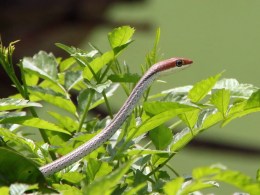
Only two snake species in America wear bright green as their primary color, yet these harmless reptiles are often confused or misidentified.
The smooth green snake and rough green snake share similar coloration but differ dramatically in habitat preferences, geographic ranges, and physical characteristics.
Whether you’ve spotted a vibrant green snake in your garden or during a nature hike, understanding which species you’ve encountered helps you appreciate their ecological roles and recognize their conservation needs.
This guide provides the precise identification details and behavioral insights you need to distinguish between America’s two green snake species.
Smooth Green Snake

The smooth green snake (Opheodrys vernalis) represents one of North America’s most distinctive yet often overlooked reptiles. These slender, grass-green snakes inhabit northern regions across the continent, from the Atlantic coast to the Rocky Mountains.
Their ground-dwelling lifestyle and specific habitat requirements make them less commonly encountered than many other snake species, yet their presence indicates healthy grassland ecosystems.
Physical Characteristics and Identification
Smooth green snakes typically measure between 14 to 20 inches in total length, with exceptional individuals reaching up to 26 inches. Their most defining feature is their uniformly bright green dorsal coloration, which can range from emerald to yellowish-green depending on age and season. The ventral surface contrasts sharply with a white, cream, or pale yellow coloration.
Key Insight: The “smooth” designation comes from their smooth scales, which lack the raised ridge (keel) found on rough green snake scales. When you observe a green snake closely, this tactile difference provides the most reliable identification method.
The species exhibits several distinctive physical traits:
- Scale Pattern: Smooth, glossy scales arranged in 15 rows at mid-body
- Head Shape: Small, narrow head barely wider than the neck
- Eye Size: Proportionally large eyes with round pupils
- Body Build: Extremely slender and cylindrical throughout length
- Tail Length: Relatively short tail, comprising roughly 25-30% of total length
According to the Smithsonian’s National Museum of Natural History, smooth green snakes undergo color changes after death, often turning blue or grayish within hours. This post-mortem transformation has confused many observers examining deceased specimens.
Common Mistake: Many people assume all small green snakes are juvenile rough green snakes. However, smooth green snakes maintain their smaller size throughout adulthood and prefer completely different habitats.
Geographic Distribution and Habitat Preferences
Smooth green snakes occupy a broad range across northern North America, though their distribution is notably patchy. You’ll find populations from Nova Scotia and southern Quebec westward through the Great Lakes region, extending into Montana, Wyoming, and northern Utah. Isolated populations also exist in the Appalachian Mountains southward to northern Georgia.
Their habitat preferences are highly specific, which explains their scattered distribution:
Primary Habitats:
- Open Grasslands: Prairies and meadows with dense herbaceous vegetation provide ideal hunting grounds and cover from predators.
- Moist Meadows: Areas near streams or wetlands where grass remains green and insect populations thrive throughout summer.
- Rocky Outcrops: Sites with exposed rock and sparse vegetation where snakes can bask while remaining close to protective crevices.
- Cleared Areas: Old fields, roadsides, and right-of-ways that maintain grass cover without becoming forested.
Research from herpetological surveys across northeastern states indicates smooth green snakes rarely venture into forested areas or dense shrublands. They require open environments where they can move through grass while hunting ground-dwelling insects.
Pro Tip: The best time to observe smooth green snakes is during late morning on warm, partly cloudy days. They emerge from overnight retreats to bask and hunt but avoid the intense heat of midday summer sun.
Behavior and Ecology
Smooth green snakes exhibit behavioral patterns distinctly different from their rough green relatives. These ground-dwelling snakes rarely climb and spend most of their active hours moving through grass at ground level or just beneath the surface.
Their daily activity follows predictable patterns:
| Time Period | Activity Level | Primary Behaviors |
|---|---|---|
| Early Morning (6-9 AM) | Low to Moderate | Basking near retreats, gradual warming |
| Mid-Morning (9 AM-12 PM) | Peak | Active hunting, maximum movement through habitat |
| Midday (12-3 PM) | Reduced | Seeking shade in hot weather, continued activity in cool conditions |
| Afternoon (3-6 PM) | Moderate | Secondary activity peak, hunting before sunset |
| Evening/Night | Minimal | Retreat to cover, inactive throughout night |
Diet and Feeding Strategies
Smooth green snakes are specialized insectivores with strong preferences for soft-bodied prey. Their diet consists primarily of:
- Caterpillars and moth larvae (major component during summer months)
- Spiders, including both web-builders and ground hunters
- Crickets and small grasshoppers
- Beetles and their larvae
- Ants and small flies when other prey is scarce
Unlike snakes that actively pursue prey, smooth green snakes employ a patient hunting strategy. They move slowly through grass, using visual cues to locate prey, then strike quickly when an insect comes within range. Their small, delicate jaws limit them to prey items no larger than a mature caterpillar.
Important Note: These snakes never feed on vertebrate prey. They pose no threat to bird eggs, young mammals, or other wildlife that might concern homeowners or farmers.
Reproduction and Life Cycle
Mating occurs in late spring, typically May or early June depending on latitude. Female smooth green snakes are oviparous, laying eggs rather than giving birth to live young. A typical clutch contains 3 to 12 eggs, which females deposit in protected locations such as rotting logs, beneath flat rocks, or in abandoned rodent burrows.
The eggs incubate for approximately 4 to 23 days—an unusually short period for snake eggs. This rapid development appears to be an adaptation to northern climates where summer is brief. Hatchlings emerge measuring 3.5 to 5 inches and are immediately independent.
Smooth green snakes reach sexual maturity in their second or third year. Their lifespan in the wild typically ranges from 3 to 6 years, though individuals in protected environments may live longer.
Conservation Status and Threats
While not federally listed as threatened or endangered, smooth green snakes face declining populations across much of their range. The International Union for Conservation of Nature lists them as a species of least concern globally, but several states classify them as threatened or of special concern.
Primary threats include:
- Habitat Loss: Conversion of grasslands to agriculture and development eliminates suitable habitat
- Pesticide Use: Chemical insect control removes their prey base and may poison snakes directly
- Fire Suppression: Natural grassland burning cycles maintained by fire benefit smooth green snakes, but modern fire suppression allows woody encroachment
- Road Mortality: Snakes crossing roads between habitat patches suffer high mortality rates
- Climate Change: Shifting temperature and precipitation patterns may alter habitat suitability in northern portions of their range
Conservation efforts focus on protecting remaining grassland habitats and managing existing preserves to maintain open conditions. Organizations like Partners in Amphibian and Reptile Conservation work to coordinate regional conservation strategies for smooth green snakes and other grassland reptiles.
Rough Green Snake

The rough green snake (Opheodrys aestivus) brings a splash of tropical color to southeastern and south-central United States. These arboreal specialists spend their lives in trees and shrubs, rarely descending to the ground except to move between vegetation patches or during seasonal movements. Their tree-dwelling lifestyle and gentle temperament make them among the most admired snakes in their range.
Physical Characteristics and Identification
Rough green snakes are notably longer and more robust than their smooth green cousins, typically measuring 22 to 32 inches with maximum lengths reaching 45 inches. Their bright green dorsal coloration is usually more vivid than smooth green snakes, often displaying a more yellow-green tone that provides exceptional camouflage among leaves.
The defining physical characteristic is their keeled scales—each scale bears a raised ridge down its center, creating a slightly rough texture when touched. This feature, combined with their size and habitat use, provides reliable identification.
Distinguishing Features:
- Scale Structure: Keeled scales arranged in 17 rows at mid-body (vs. 15 smooth rows in smooth green snakes)
- Body Proportions: More elongated and whip-like than smooth green snakes
- Tail Length: Proportionally longer tail, often exceeding one-third of total body length
- Head Size: Slightly larger head more distinct from neck
- Ventral Color: Belly typically pure white to pale yellow
Research published in comparative herpetology journals demonstrates that rough green snakes have longer, more prehensile tails than smooth green snakes, an adaptation for their arboreal lifestyle. The tail functions almost like a fifth limb when navigating thin branches.
Key Insight: Young rough green snakes can appear similar in size to adult smooth green snakes, but their habitat choice immediately reveals their identity—rough green snakes are found in trees and shrubs, while smooth green snakes remain on the ground.
Geographic Range and Habitat Selection
Rough green snakes occupy the southeastern and south-central United States, from southern New Jersey along the Atlantic coast to Florida, westward through the Gulf Coast states to eastern Texas and Oklahoma, and northward along the Mississippi River valley to southern Illinois and Indiana. Their range extends significantly farther south and west than smooth green snakes.
Pro Tip: In areas where both species‘ ranges overlap—primarily in the mid-Atlantic states and parts of the Midwest—habitat type immediately identifies which species you’re observing. Trees and shrubs host rough green snakes, while open grasslands indicate smooth green snakes.
The species thrives in vegetated areas near water:
Preferred Habitats:
- Riparian Forests: Creek and river corridors with dense overhanging vegetation provide ideal conditions. The combination of abundant insects and continuous canopy cover supports high snake densities.
- Cypress Swamps: Southern wetland forests offer extensive arboreal habitat with consistent humidity and insect populations.
- Woodland Edges: Transition zones between forests and clearings concentrate both vegetation diversity and insect abundance.
- Suburban Gardens: Well-landscaped yards with mature trees, shrubs, and minimal pesticide use sometimes host rough green snakes, particularly in southeastern cities.
According to regional herpetofaunal surveys, rough green snakes show strong associations with areas where annual rainfall exceeds 35 inches. Western populations concentrate in riparian corridors that maintain humidity even in drier surrounding landscapes.
Behavioral Ecology and Natural History
Rough green snakes exhibit fascinating behavioral adaptations for arboreal life. Unlike terrestrial snake species, they spend virtually their entire lives above ground, navigating branches with graceful precision.
Movement and Activity Patterns
These snakes are primarily diurnal, most active during daylight hours when their insect prey is abundant and their vision is most effective. Activity begins in mid-morning as sun warms the canopy, peaks during mid-afternoon, and tapers as evening approaches.
Their locomotion demonstrates remarkable arboreal specialization:
- Branch Navigation: They move slowly along branches, often pausing for extended periods while waiting for prey
- Gap Crossing: They bridge spaces between branches by extending their bodies across gaps, sometimes spanning distances equal to 60% of their body length
- Vertical Movement: They ascend and descend tree trunks using textured bark for purchase
- Defensive Freezing: When threatened, they freeze motionless, relying on camouflage rather than flight
Common Mistake: Some observers report rough green snakes “hanging” motionless in vegetation for hours. This isn’t unusual behavior—it’s their primary hunting strategy. These patient predators wait for insects to come within striking distance rather than actively pursuing prey.
Feeding Behavior and Diet
Rough green snakes maintain a strict insectivorous diet similar to smooth green snakes but with prey selection reflecting their arboreal habitat:
- Primary Prey: Caterpillars, particularly those feeding on tree foliage
- Spiders: Both web-building species and hunting spiders found on vegetation
- Flying Insects: Moths, flies, and other aerial insects captured while resting on leaves
- Crickets and Katydids: Tree-dwelling orthopterans taken opportunistically
- Insect Larvae: Soft-bodied larvae found on foliage
Studies from the Savannah River Ecology Laboratory reveal that rough green snakes have slower metabolic rates than many snake species, allowing them to survive on infrequent meals. An adult may feed only once every 3-5 days during peak activity periods.
Their hunting technique involves:
- Positioning: Selecting a branch location along insect movement corridors
- Ambush: Remaining motionless, sometimes for hours, while waiting for prey
- Visual Detection: Using excellent eyesight to track insect movement
- Rapid Strike: Lunging quickly to capture prey before it can fly away
- Consumption: Swallowing prey whole, often while still maintaining position on the branch
Reproductive Biology
Mating occurs in spring, typically April through early June. Male rough green snakes locate females through pheromone detection and may engage in subtle competition when multiple males encounter the same female. Courtship involves the male rubbing his chin along the female’s body, a behavior common in many snake species.
Female rough green snakes lay eggs rather than bearing live young. Clutch size ranges from 3 to 12 eggs, with larger females generally producing more eggs. Females deposit eggs in protected locations such as:
- Rotting logs or stumps
- Hollow trees or tree cavities
- Thick leaf litter
- Beneath loose bark
- Occasionally in protected ground sites
The eggs require approximately 5 to 12 weeks to incubate, depending on temperature and humidity. Hatchlings emerge measuring 7 to 9 inches and display the same bright green coloration as adults. They immediately climb into vegetation and begin hunting small insects.
Important Note: Female rough green snakes provide no parental care after laying eggs. Hatchlings are completely independent and must immediately find appropriate habitat and prey to survive.
Conservation Status and Population Trends
Rough green snakes are currently listed as least concern by conservation organizations, and populations remain relatively stable across much of their range. However, they face localized threats that warrant monitoring:
Current Threats:
- Pesticide Application: Insecticide use in agricultural and suburban areas eliminates prey populations and may directly poison snakes
- Habitat Fragmentation: Loss of riparian corridors isolates populations and reduces genetic diversity
- Climate Impacts: Increased drought frequency in western portions of range may reduce suitable habitat
- Road Mortality: Snakes crossing roads between habitat patches suffer mortality, particularly during seasonal movements
- Collection Pressure: Their docile nature and attractive appearance make them targets for collection, though this occurs less frequently than in past decades
According to the U.S. Geological Survey’s Amphibian and Reptile Database, rough green snake populations appear most stable in protected areas with intact riparian corridors and minimal pesticide use. Urban populations persist in cities with mature tree canopy and green space networks.
Conservation recommendations include:
- Riparian Protection: Maintaining vegetated buffers along waterways preserves critical habitat
- Pesticide Reduction: Minimizing insecticide use supports healthy prey populations
- Habitat Connectivity: Preserving wildlife corridors allows movement between population centers
- Public Education: Teaching people to recognize and appreciate these harmless snakes reduces persecution
- Monitoring Programs: Tracking population trends helps identify declining areas requiring intervention
Organizations like the North American Field Herping Association coordinate citizen science programs that document rough green snake observations, contributing valuable distribution and abundance data.
Species Comparison Summary
Understanding the differences between smooth and rough green snakes helps ensure accurate identification and appropriate conservation responses:
| Feature | Smooth Green Snake | Rough Green Snake |
|---|---|---|
| Scientific Name | Opheodrys vernalis | Opheodrys aestivus |
| Average Length | 14-20 inches | 22-32 inches |
| Scale Type | Smooth, glossy | Keeled, slightly rough |
| Scale Rows | 15 at mid-body | 17 at mid-body |
| Primary Habitat | Ground-level grasslands | Trees and shrubs |
| Geographic Range | Northern U.S., southern Canada | Southeastern and south-central U.S. |
| Activity Period | Ground movement, low vegetation | Arboreal, rarely on ground |
| Tail Proportion | 25-30% of total length | 33-35% of total length |
| Conservation Status | Declining in many areas | Generally stable |
Pro Tip: If you photograph a green snake and want to confirm its identity later, capture images showing the snake’s habitat (ground vs. trees), its length relative to nearby objects, and close-ups of scale texture if possible. These details provide reliable identification clues.
Safe Observation Guidelines
Both green snake species are completely harmless and rarely attempt defensive behaviors when encountered. However, responsible observation practices benefit both you and the snakes:
When Observing Green Snakes:
- Maintain a respectful distance of at least 2-3 feet
- Move slowly to avoid startling the snake into fleeing
- Never attempt to capture or restrain wild snakes
- Photograph from a distance using zoom features rather than approaching closely
- Keep pets away from snakes to avoid stress to both animals
- Avoid handling unless necessary for relocation from immediate danger
If You Find a Green Snake in Your Yard:
- Appreciate its presence as an indicator of healthy insect populations
- Allow it to remain undisturbed—it will move on naturally
- Avoid pesticide use in areas where you observe green snakes
- Consider creating habitat by maintaining native plantings and natural areas
- Educate family members and neighbors about the snake’s harmless nature
Important Note: Never relocate green snakes from your property to “better habitat” elsewhere. Snakes establish territories based on resource availability, and relocation typically results in increased mortality as displaced individuals attempt to return or fail to find adequate resources in unfamiliar areas.
The Role of Green Snakes in Ecosystems
Both green snake species provide valuable ecosystem services that benefit natural and human-modified environments. Their specialized diet focuses on insects, particularly soft-bodied species that can reach pest levels without natural controls.
Ecological Benefits:
- Insect Population Control: A single green snake consumes hundreds of caterpillars, spiders, and other insects annually
- Indicator Species: Their presence signals healthy insect populations and quality habitat conditions
- Food Web Connections: They serve as prey for birds of prey, larger snakes, and mammals, transferring energy through ecosystems
- Natural Pest Management: In gardens and orchards, they help control caterpillars and other plant-eating insects without chemical inputs
Research from ecological studies across their ranges suggests green snakes play specialized roles that few other predators fill. Their arboreal (rough green) and grassland (smooth green) specializations allow them to access prey in locations where many other predators cannot effectively hunt.
This information is for educational purposes only. While green snakes are non-venomous and harmless, always exercise caution around wildlife and observe animals from a respectful distance.