Bunting Birds in Florida: Where to Find Painted, Indigo, and Lazuli Species

August 25, 2026
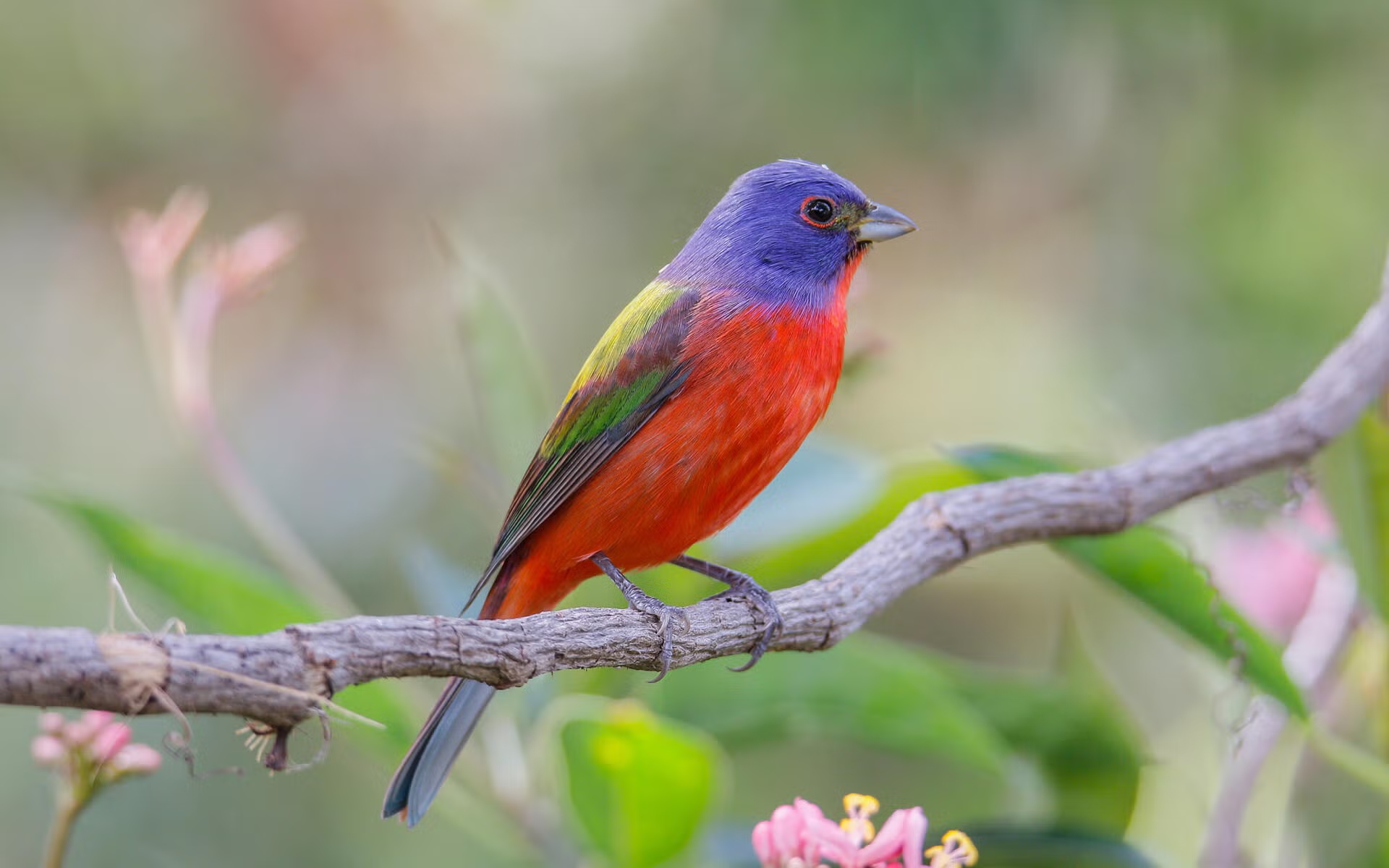
Only one of the three bunting birds in Florida actually raises its young in the state. The other two are visitors, and one is little more than a rumor whispered among birders who keep meticulous records. That distinction matters if a person is hoping to spot these small, seed-eating songbirds in a backyard, coastal hammock, or roadside thicket.
This guide breaks down the painted bunting, the indigo bunting, and the lazuli bunting one at a time, covering what each looks like, where it turns up in Florida, and when to watch for it. Anyone who already enjoys tracking birds that are native to Florida will find these three species add an extra layer of seasonal detective work to backyard birding.
1. Painted Bunting

The painted bunting (Passerina ciris) is the bunting most Floridians picture when they hear the word. The male looks like it was colored in by a child who ignored every rule about realism: a blue head, a lime-green back, and red-orange underparts packed onto a five-inch songbird. Its French common name, nonpareil, reflects that reputation — the male painted bunting is often described as the most beautiful bird in North America and as such has been nicknamed nonpareil, or “without equal.” Females and young birds skip the rainbow entirely and wear a clean, bright green that works as camouflage in dense foliage, a shade birders sometimes compare to the tones covered in a guide to yellow birds in Florida.
Florida is home to part of the species’ breeding range. Painted buntings occur in two geographically distinct breeding populations: a western population that ranges from northwest Florida to Texas, and an eastern population limited to coastal areas from North Carolina to northern Florida, and inland along large rivers. Within the state, breeding takes place in Atlantic coastal counties from northern Brevard County to the Georgia border. Nests are tucked into scrub communities, palmetto thickets, and old citrus groves rather than open lawns.
Outside that narrow breeding strip, the painted bunting becomes a winter visitor across much of the peninsula. The species is commonly seen during the winter months, October through April, when it migrates to Florida. Birders in Southwest Florida often find small flocks working the edges of preserves and botanical gardens during those cooler months, feeding low in brush before flying up to a perch at the first sign of disturbance.
Pro Tip: Painted buntings favor white proso millet over red millet or milo. A caged tube feeder filled with a finch mix and placed near dense shrubs gives the birds cover to retreat into after feeding.
1..1 Conservation Concerns
The painted bunting’s colors have made it a target as well as an attraction. The birds are still illegally trapped and sold in large numbers in Mexico, Central America, the Caribbean, and to a lesser extent in Florida, despite efforts by conservationists to curb the trade. Habitat loss compounds the pressure: Florida breeding and winter season surveys show an astounding 4-6 percent annual decrease in this species’ numbers, and range-wide data tell a similar story, with populations dropping approximately 0.8% per year for a cumulative decline of about 33% between 1966 and 2019, according to the North American Breeding Bird Survey.
Researchers point to an unlikely culprit alongside habitat loss. One suspect is the brown-headed cowbird, which lays its eggs in the nests of other songbirds rather than building its own, and in the competition for food, the faster-growing cowbirds win, often starving the young buntings and even ousting them from the nest. Cowbirds belong to the same broad family grouping covered in a guide to black birds in Florida, and their nest-parasite habits are worth understanding for anyone hoping to protect a backyard bunting pair.
Gardeners who want to support painted buntings should also double-check what they plant nearby. Some ornamental shrubs common in Florida landscaping are unsafe for backyard birds, so it helps to review a list of plants that are poisonous to birds before filling in cover near a feeding station.
2. Indigo Bunting

Where the painted bunting is a rainbow, the indigo bunting (Passerina cyanea) is a single, saturated color: an electric, almost unreal blue that covers the breeding male from head to tail. That blue is not pigment at all. There is no blue pigment in the male’s plumage; the jewel-like color comes from microscopic structures inside each feather barb that scatter and reflect blue light back to the eye — a phenomenon biologists call structural coloration. Females and juveniles wear a plain, warm brown that helps them stay hidden while nesting.
Florida sits at the southern edge of this species’ nesting range rather than the middle of it. The indigo bunting is migratory, ranging from southern Canada to northern Florida during the breeding season, and from southern Florida to northern South America during the winter. That means most of the state sees indigo buntings only as they pass through in spring and fall, though a modest number stick around. A small wintering population also persists in southern Florida, and a few indigo buntings winter in the southern United States, where they are often found at bird feeding stations, especially in Florida and south Texas.
Winter is also when identification gets tricky. Non-breeding males lose their blue and resemble females, and both can turn up at the same feeders as painted buntings. In the Sunshine State, indigo buntings may mingle with a close relative, the splendidly multi-colored painted bunting, so a flock of “greenies” at a feeder is worth a second look before assuming every bird is one species.
Migration itself is one of the more remarkable habits tied to this bird. The indigo bunting migrates at night and can navigate by the stars, a behavior first confirmed through planetarium studies decades ago. Those interested in other Florida species with unusual nighttime habits may enjoy comparing notes with birds covered in a guide to birds that sing at night in Florida, even though indigo buntings migrate silently rather than singing after dark. The Gulf crossing itself is no small feat for a bird this size: the trip across the Gulf of Mexico from Florida is approximately six hundred miles, and buntings weighing at least 18 grams could make the trip without any stops.
Attracting indigo buntings takes a slightly different approach than luring in their painted cousins. Feeders stocked with small seeds such as thistle or nyjer tend to work well, and the same brushy edge habitat that draws small insect-eating songbirds, including species covered in a guide to hummingbirds in North Florida, gives indigo buntings cover between feeding bouts. Their diet leans heavily on insects during the warmer months, and spiders make up part of that menu, similar to prey documented in a rundown of types of spiders in Florida.
3. Lazuli Bunting

The lazuli bunting (Passerina amoena) is the odd one out on this list, and Florida birders should not expect to see one on a typical outing. This is fundamentally a western bird: its breeding range stretches from the Great Plains west to the Pacific coast, nowhere near the Southeast. Males show a sky-blue head and back, a rust-orange breast band, and a white belly, a color pattern distinct enough that it is rarely confused with anything else once seen well.
The lazuli bunting’s closest relative on this list is the indigo bunting, and the genetic connection between them is well documented. The indigo bunting is closely related to the lazuli bunting and interbreeds with the species where their ranges overlap, and the indigo bunting is the sister of two sister groups, a “blue” clade made up of the lazuli bunting and blue grosbeak, and a “painted” clade that includes the painted bunting. That overlap plays out almost entirely in the Great Plains, far from Florida. Indigo and lazuli buntings defend territories against each other in the western Great Plains where they occur together, share songs, and sometimes interbreed.
Important Note: Because the lazuli bunting’s normal range does not extend into the Southeast, confirmed Florida sightings are extremely uncommon and typically involve individual birds well outside their expected range rather than a regular seasonal presence. Anyone who believes they have spotted one in Florida should document it carefully and report it to a regional birding records committee for verification.
For context on just how far a lazuli bunting would have to wander to reach Florida, it helps to compare travel capabilities across the bird world; the species covered in a guide to fastest birds illustrates how much variation exists in avian travel range, though buntings rely on stamina and favorable winds rather than raw speed. A lazuli bunting turning up on the Gulf Coast or in a Panhandle thicket would be a genuine rarity worth reporting to local Audubon chapters.
3..1 Comparing the Three Buntings
Because these three species can overlap in habitat and season, a side-by-side comparison makes field identification easier.
| Species | Male Coloration | Florida Status | Best Viewing Season |
|---|---|---|---|
| Painted Bunting | Blue head, green back, red-orange underparts | Breeds along northeast coast; winters statewide | October through April |
| Indigo Bunting | Solid electric blue | Passes through in migration; small winter population in the south | March–May and September–October |
| Lazuli Bunting | Sky-blue head, orange breast band, white belly | Rare vagrant; not part of the regular Florida bird list | Unpredictable, if ever |
Homeowners hoping to attract any of these three should focus on the same basics: dense shrubby cover near a feeding station, a reliable water source, and seed mixes heavy on white millet or nyjer rather than sunflower or corn. The birds’ small size and preference for low, tangled vegetation put them in different habitat than the wading species covered in a guide to water birds in Florida, so a backyard set up for herons or egrets will not automatically suit a bunting.
Patience matters more than equipment. Painted and indigo buntings are shy around people even when they visit feeders regularly, often darting to cover at the slightest movement. Watching quietly from a distance, ideally with a natural perch near the feeder for the birds to use, gives the best chance of a clean look at a species that many Florida birders consider one of the state’s genuine seasonal rewards.