Can You Own a Boa Constrictor in Iowa? What State and Federal Law Allow

September 23, 2026
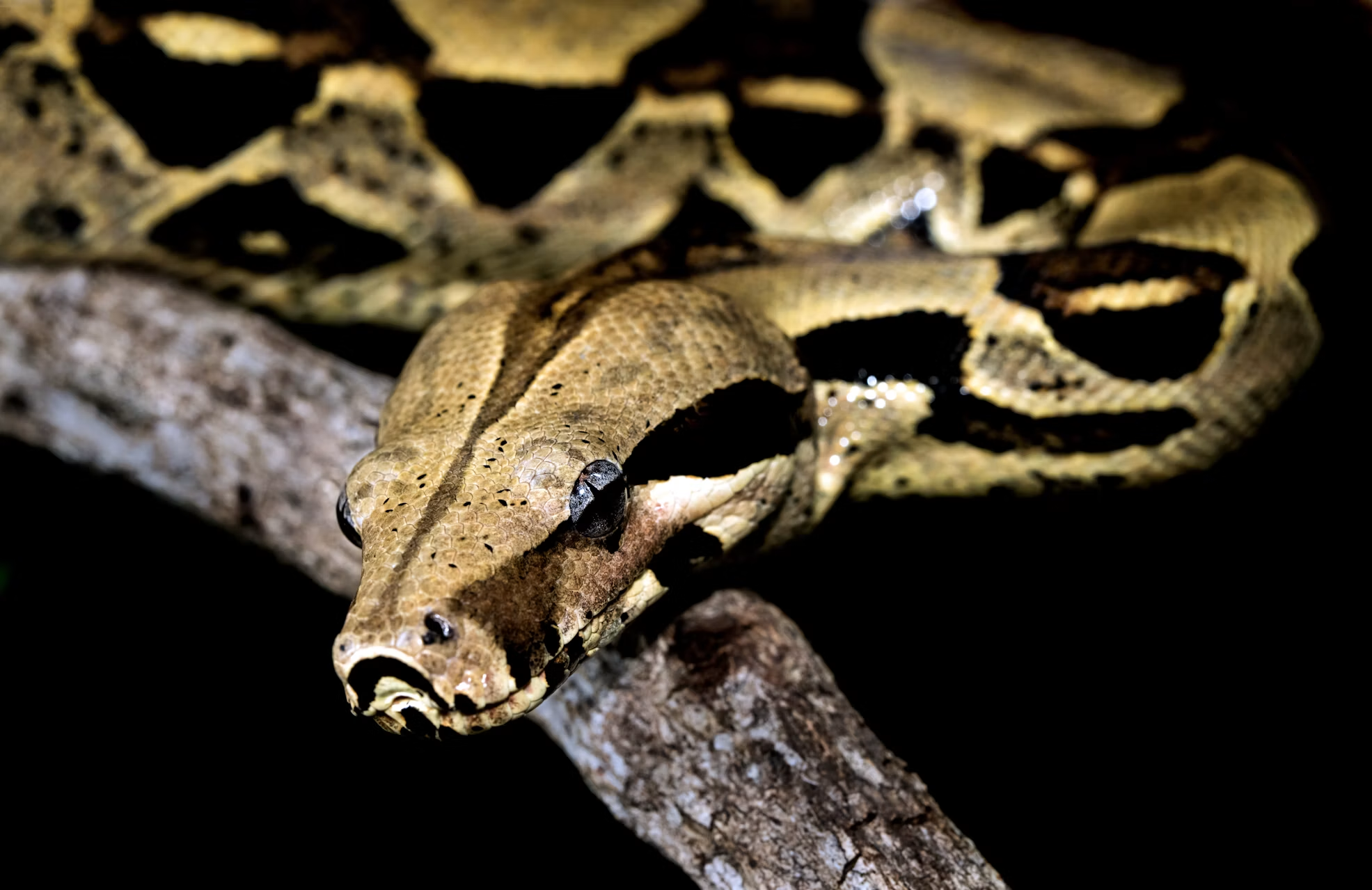
If you’re wondering whether you can own a boa constrictor in Iowa, the answer depends on which layer of law you’re looking at, and that’s exactly where most new owners get tripped up. In 2018, a resident of Clinton, Iowa spotted something unexpected along the Mississippi River in nearby Fulton, Illinois: a seven-foot boa constrictor lying motionless near a lock and dam. The snake had likely been someone’s discarded pet, a reminder that boas already live in Iowa households, whether or not every owner has sorted out the paperwork.
The boa constrictor (Boa constrictor) is a heavy-bodied, non-venomous constrictor native to Central and South America, and it’s one of the most commonly kept large snakes in the U.S. pet trade. Unlike giant invasive pythons, it was never placed on the federal injurious species list, but Iowa layers its own permit rules and local ordinances on top of that federal gap. Here’s what actually governs boa ownership in the state.
Is It Legal to Own a Boa Constrictor in Iowa
In most cases, yes, though not without conditions. Iowa’s Chapter 717F Dangerous Wild Animals Act names specific giant constrictors it treats as outright dangerous wild animals: the statute’s henophidia clause is written narrowly. According to the current Iowa Code, a member of the superfamily henophidia is limited to reticulated pythons, anacondas, and African rock pythons for purposes of the dangerous wild animal definition. A common pet boa constrictor isn’t named in that specific clause, which sets it apart from reticulated pythons under Iowa’s strictest ownership category.
That said, “not a dangerous wild animal” doesn’t mean “no rules apply.” A separate track of Iowa regulation covers nongame and exotic wildlife possession, and boas fall squarely inside it. As one legal summary notes, exotic species and nongame species requiring a permit for possession include, but are not limited to, parrots, ferrets, hedgehogs, pythons, boas, and other snakes. That means a boa owner in Iowa is generally clear of the outright ban that hits pythons, but still needs to check permit obligations before bringing one home.
Important Note: Statutory language around constrictor snakes can be interpreted differently by different counties, and enforcement guidance isn’t always consistent statewide. Before acquiring a boa, confirm current classification directly with the Iowa Department of Natural Resources or your county’s animal control office.
Federal Restrictions on Boa Constrictors
At the federal level, boa constrictors sit outside the restrictions that apply to several of their relatives. The U.S. Fish and Wildlife Service uses the Lacey Act’s injurious wildlife provisions to control which large constrictors can be imported or moved across state lines, and it built that list out in stages.
The agency took advantage of the opportunity to proactively list three other species of large foreign constrictors in 2012, and four more in 2015, closing gaps left by the earlier rule. The reticulated python was part of that later expansion, since the reticulated python joined the injurious list a few years later than the first four species named in 2012.
Boa constrictors, however, never made that list. As one legal roundup puts it, the boa constrictor was considered for the injurious list but was never added, so it remains outside federal restrictions even though several states, Iowa included, regulate it separately at the state level.
Practically, this means the federal government doesn’t block you from bringing a legally acquired boa across state lines the way it would with a Burmese python or one of the newly listed anaconda species. It also doesn’t touch conservation status protections that apply to some native Iowa species, which you can compare against the state’s own endangered animals list if you’re curious how exotic pet rules differ from native wildlife protections.
Iowa’s Laws on Owning a Boa Constrictor
Iowa’s primary tool for controlling large or risky animals is Chapter 717F, the Dangerous Wild Animals Act. Under this law, except as otherwise provided in this chapter, a person shall not own or possess a dangerous wild animal or cause or allow a dangerous wild animal owned by a person or in the person’s possession to breed. The statute also forbids bringing a listed animal into Iowa from out of state.
The dangerous wild animal list itself covers a lot of ground, from big cats and bears to venomous native species. Iowa’s own reptile population, including its native snakes and rattlesnakes, is treated differently since those species are wildlife rather than exotic imports; you can see how that native/exotic distinction plays out across the state’s snake species and its rattlesnake populations, both of which fall under separate wildlife rules rather than the 717F framework built for exotic constrictors and big cats.
Two details matter if you already own a boa or are considering one. First, there’s a grandfather clause: the law allows a person who owns or possesses a dangerous wild animal on July 1, 2007 to continue to own or possess the dangerous wild animal subject to the provisions of the laws, though this mainly protects long-time owners of species that were already restricted before that date. Second, since the statute’s constrictor language, as written in the current Iowa Code, names reticulated pythons, anacondas, and African rock pythons specifically, a standard venomous or dangerous species framework that governs vipers and rattlesnakes doesn’t automatically sweep in a boa constrictor the way it does a python.
Pro Tip: Don’t rely on pet-store labeling alone to determine legal status. Confirm the exact species and, where relevant, the total length of your snake, since some rules that don’t apply at the state level can still apply locally based on size.
Permits and Requirements for Boa Constrictor Ownership in Iowa
Even when a boa constrictor clears the dangerous wild animal bar, Iowa’s permitting structure isn’t a single form. It runs across at least two levels: state wildlife possession rules and, in many counties, a separate exotic animal license.
At the state level, exotic and nongame wildlife possession generally requires a permit administered through Iowa’s natural resources framework, with an exemption for people who already hold specific state or federal certification. As a broader national summary of exotic animal law explains, wild animal possession permits are required for certain wild animals, and they are divided up into three classes, with each class of permit requiring more stringent conditions depending on the species involved. Iowa’s version of this system is referenced directly under Iowa Code Title XVI, Chapter 717F, which lays out the definitions and permit exemptions that apply to dangerous wild animals statewide.
At the county level, requirements can look different again. Iowa County’s exotic animal permit process illustrates how local administration works in practice: all exotic animal permits expire on December 31st of the permit year, and renewal applications are available in late October from the Iowa County Sheriff’s Department. That kind of annual renewal cycle, tied to a specific county office rather than a single statewide agency, is common across Iowa’s 99 counties.
| Requirement | State-Level (Chapter 717F / DNR) | Local-Level (County or City Ordinance) |
|---|---|---|
| Who administers it | Iowa Department of Agriculture and Land Stewardship / DNR | County sheriff’s office or city animal control |
| What it targets | Species named as “dangerous wild animals” or nongame/exotic wildlife | Exotic animals defined by local code, often by species or size |
| Common trigger for boas | Possession of nongame/exotic wildlife generally | Snake or reptile length thresholds |
| Renewal cycle | Varies by permit type | Often annual, tied to calendar year |
Because permit categories overlap, it’s worth checking both layers before you assume you’re covered. A permit that satisfies the county doesn’t automatically satisfy the state, and vice versa. This mirrors how Iowa handles other non-traditional pets, such as the ownership rules laid out for hedgehogs, where a single missed permit step can put an otherwise legal pet in violation.
Local Ordinances That May Apply in Iowa
Local government is where boa constrictor rules often get stricter than the state baseline, and size is usually the trigger. Story County’s exotic animal ordinance is a clear example of how this works. Under that code, no person may own, possess, or have custody of any of the following exotic animals unless that person obtains a license for that purpose from the Animal Control Department, with an exemption for individuals holding a valid Iowa Collectors Permit from the Iowa Department of Natural Resources and certification by a State or federal regulatory agency that the animal was born and maintained continuously in captivity.
The size thresholds in that ordinance matter specifically for boa owners. Story County’s regulated list includes any snake with a total length of eight feet or more and, separately, any reptile with a total body length of three feet or more. Adult boa constrictors regularly reach six to ten feet, which puts a mature, well-fed boa well within range of that eight-foot local licensing trigger even in a county where the snake itself isn’t state-restricted.
This is the kind of local variation that catches new owners off guard. A boa that’s perfectly legal to possess under Chapter 717F can still require a city or county license once it grows past a certain length, or once a local government decides to regulate exotic pets more tightly than the state does. Iowa cities have taken different approaches to unconventional animals before; the patchwork of local rules governing backyard roosters across Iowa municipalities follows a similar pattern of state permissiveness paired with tighter local control.
Important Note: Ordinances differ significantly between counties and cities. A boa that requires no local permit in one Iowa county could require a license, an inspection, or even be barred outright in a neighboring jurisdiction. Always check your specific city and county code before acquiring or relocating with a boa constrictor.
Penalties for Illegally Owning a Boa Constrictor in Iowa
Penalties in Iowa scale depending on which rule you’ve broken, and boa constrictors can trigger more than one enforcement path depending on classification and location. Under the state’s Dangerous Wild Animals Act, a person owning or possessing a dangerous wild animal who violates a provision of this chapter is subject to a civil penalty of not less than two hundred dollars and not more than two thousand dollars for each dangerous wild animal involved in the violation, according to a legal summary current as of July 2025. That penalty structure applies most directly to species actually named on the dangerous wild animal list, which, as covered earlier, generally does not include standard pet boas by name.
Where a boa is more likely to create legal exposure is at the local level, through county or city exotic animal ordinances like Story County’s licensing requirement. Unlicensed possession of a regulated exotic animal typically results in citations, fines set by local code, or animal seizure until the owner comes into compliance. Iowa’s broader track record with unpermitted exotic pets shows how this plays out: when a Waterloo resident bought a baby alligator without realizing state law doesn’t allow people to keep alligators or other exotic animals, the animal was surrendered to animal control and eventually placed in a sanctuary. A boa constrictor case would likely follow a similar enforcement pattern if it’s kept in violation of a county ordinance, minus the outright state ban that applies to alligators.
If your boa escapes or gets loose, Iowa law generally expects a fast report and cooperation with local animal control, especially since escaped exotic pets, like the loose boa found near the Mississippi River, tend to draw wildlife agency attention regardless of your permit status.
Keeping documentation of any required permits, along with proof of the animal’s captive-bred origin, is the simplest way to avoid penalties tied to possession disputes. For broader context on how Iowa handles animals encountered outside a controlled setting, the state’s approach to roadkill and found-wildlife laws reflects the same general principle: unclear ownership status tends to default toward state or local agency control until it’s sorted out.
Owning a boa constrictor in Iowa isn’t a flat yes-or-no question, and treating it that way is the most common mistake new owners make. The species avoids the outright state ban that catches pythons and anacondas, and it was never added to the federal injurious wildlife list, but that doesn’t erase the permit and local licensing layers stacked on top.
Before you bring a boa home, or move one into the state, confirm your county’s size-based ordinance thresholds, check whether a DNR nongame wildlife permit applies to your situation, and keep captive-bred documentation on hand. That combination of checks, more than any single statute, determines whether your ownership stays fully legal.